
How to Improve Your Speaking Skills in English: 7 Simple Steps to Speak with Confidence
Have you ever felt your heart race when someone asks you a question in English? Maybe you understand what they’re saying, but your mind goes blank. You know the words, but they just won’t come out. If you’ve ever wondered how to improve your speaking skills in English, you’re not alone. This is something millions of learners face — especially in Nepal, where English is taught in schools but rarely practiced in everyday life. The good news? With the right techniques and consistent practice, you can become confident and fluent.
The good news? Speaking English doesn’t have to be scary. You don’t need to be perfect. You don’t need to sound like a movie star. You just need to start speaking — and keep going.In this post, we’ll walk you through seven simple, real-world tips that actually work. No complicated grammar rules. No pressure. Just honest, practical advice that can help you speak with more confidence — starting today.
1. Talk to Yourself (Yes, Really!)
It might sound strange, but one of the easiest ways to practice is to speak out loud — even when you’re alone.
Stand in front of a mirror and describe your day:
“I woke up late. I missed the bus. But I still made it to class.”
Talk about your plans:
“Tomorrow, I want to study math and call my friend.”
This helps your brain get used to forming sentences in English without fear of being judged. The more you do it, the more natural it feels.
Try just 5 minutes a day. You’ll be surprised how fast it builds confidence.
2. Think in English, Not Translate
Most people think in their native language and then try to translate into English. That’s like running a race with one foot tied — it slows you down and makes you stumble.
Instead, try to think directly in English. When you see a book, don’t think “किताब” then “book.” Just think “book.” When you’re tired, don’t translate — just say in your mind: “I’m tired.”
Start small. Name things around you: chair, phone, water, sky. Then build short sentences: “This is my phone. It’s black.” Over time, your brain will start to live in English, and speaking will feel much smoother.
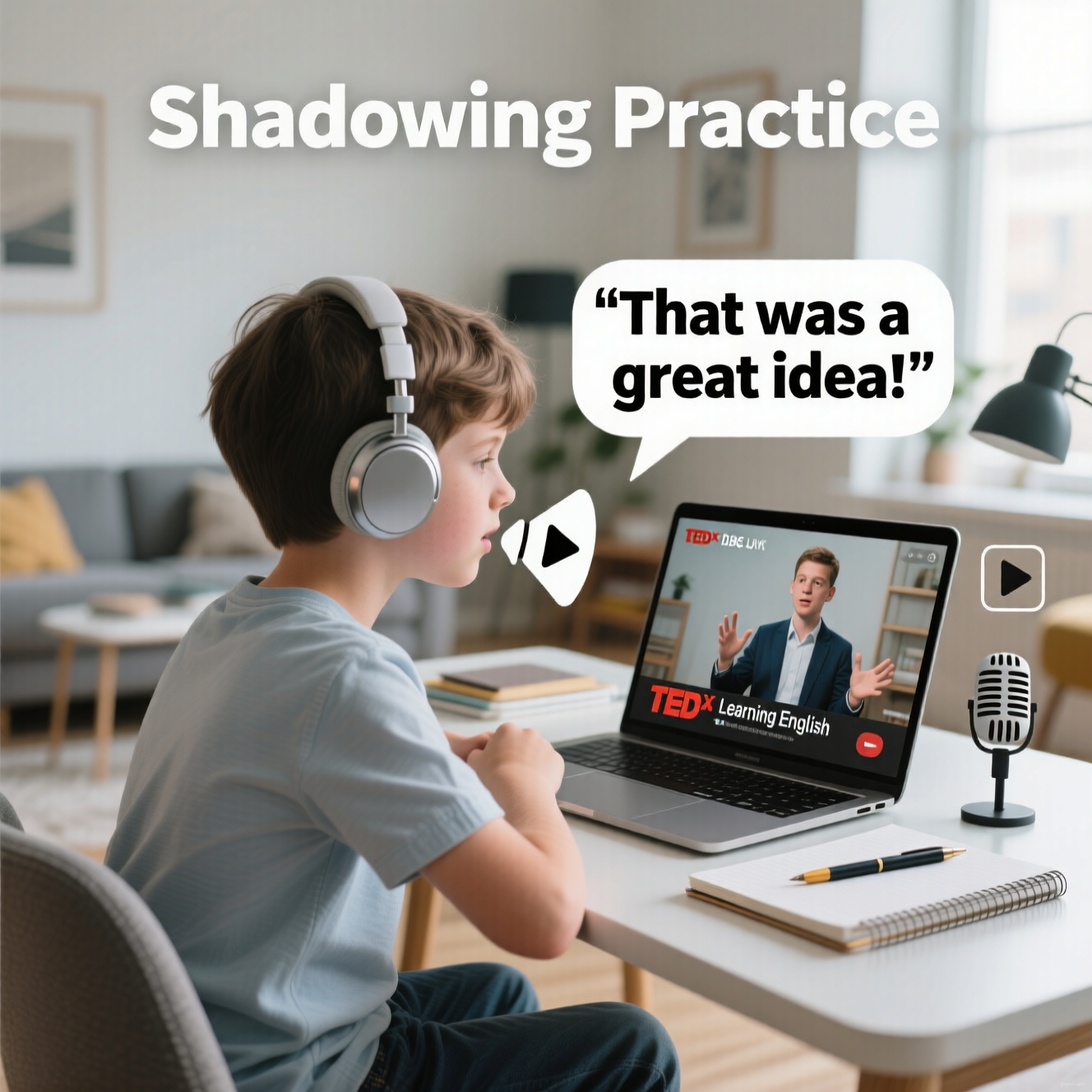
3. Listen and Repeat Like a Pro
Your ears are your best teachers. To speak well, you need to hear how real people talk — their rhythm, their pauses, their tone.
Choose short, clear videos or audio clips:
- TED Talks (look for ones under 5 minutes)
- BBC Learning English
- Motivational speeches
- Simple YouTube videos for learners
Now, play a sentence. Pause. And repeat it out loud — exactly how you heard it. This is called shadowing, and it’s one of the most effective ways to improve your speaking. You’ll pick up natural pronunciation, stress, and flow without even studying. Do this for 10 minutes a day. It’s like a workout for your speaking muscles.
4. Learn Whole Phrases, Not Just Words
Memorizing long lists of words won’t help you speak. But learning ready-to-use phrases will. For example:
- Instead of just “happy,” learn: “I’m really happy about that.”
- Instead of “sorry,” try: “Sorry, I didn’t catch what you said.”
- Learn how to join a conversation: “Can I say something?” or “I agree with you.”
These phrases are like tools. The more you have, the easier it is actually to use the language in real life. Keep a small notebook or use your phone to save new phrases. Then, challenge yourself to use one every day.
5. Speak Slowly and Clearly
Many people think speaking fast means they’re fluent. But the truth is, clarity matters more than speed. When you speak too fast, you make mistakes, mumble, and lose confidence. Instead, slow down.
- Take small pauses between sentences.
- Open your mouth more — don’t whisper.
- Finish your words: say “important” not “impor-tant.”
- Stress the right part: “PHO-to-graph”, not “pho-TO-graph.”
When you speak slowly and clearly, people understand you better — and you feel more in control. Remember: it’s not about sounding perfect. It’s about being understood.
6. Practice with a Friend (or Pretend To)
Speaking by yourself is great. But speaking with someone else is even better. Find a friend who also wants to improve. Set a rule: for 10–15 minutes, you both speak only in English. Talk about anything:
- What you ate for breakfast
- Your favorite movie
- A dream you had
No friend? No problem. Try role-playing with yourself:
- “Hi, how are you?”
- “I’m good, thanks. How about you?”
- “I had a busy day. But now I’m relaxing.”
This builds real conversation skills — and makes speaking feel less intimidating.
7. Join a Safe, Supportive Space to Practice
Let’s be honest — practicing alone can get boring. And without feedback, it’s hard to know if you’re improving. That’s where a real learning environment can make all the difference.
At Sugam Academy, we’ve helped hundreds of students in Kathmandu go from nervous and quiet to confident and clear. Our sessions are not like school. There are no exams. No pressure. Just fun, interactive activities where you learn by doing:
- Short speeches
- Group discussions
- Role plays
- Confidence-building games
We focus on honest communication — not grammar rules or memorizing scripts. Many of our students say they’ve never felt so free to make mistakes and still feel supported. And that’s where real growth happens. Because here’s the truth: confidence isn’t something you’re born with. It’s something you build — one word at a time.
Why Speaking English Matters
In today’s world, being able to speak English clearly opens doors.
- In college: You’ll need to present, discuss, and defend your ideas.
- In jobs: Employers look for people who can talk to clients, explain ideas, and work in teams.
- In life: Whether you’re traveling, applying for a scholarship, or making new friends, speaking skills give you an edge.
And the best part? You don’t have to be an extrovert. You don’t have to be the loudest person in the room. You just need to be willing to give it a try.
Final Thoughts: Start Small, Stay Consistent
You don’t need to give a TED Talk tomorrow. You just need to say one sentence today. Then two tomorrow. Then, a full minute the day after. Improvement doesn’t happen overnight — it happens in small, brave steps every time you choose to speak instead of staying silent. Be kind to yourself. Celebrate every small win. Keep showing up.
Because your voice matters, and at Sugamacademy, we believe everyone deserves the chance to be heard. Whether you’re overcoming fear, building confidence, or learning how to improve your speaking skills in English, we’re here to help you grow — one word at a time.
Ready to Speak Up?
If you’re in Kathmandu and want to improve your English in a fun, friendly, and fearless environment, we’d love to meet you. At Sugamacademy, we believe everyone has a voice — and our mission is to help you find yours.
Our Public Speaking and Personality Development course is designed for students, young professionals, and anyone who wants to communicate with more clarity and confidence. Whether you’re struggling with stage fear, looking to overcome shyness, or asking “how can I improve my English speaking?” — our proven training provides the tools, practice, and support you need.
Through interactive sessions, real-life speaking exercises, and expert guidance — just like in our popular public speaking training in Kathmandu — you’ll build not just language skills, but the confidence to use No judgment. No pressure. Just real progress — one word at a time.
Ready to speak up? Contact Sugamacademy and take the first step toward becoming the confident communicator you were meant to be.
FAQs: How to Improve Your Speaking Skills in English
1. How can I improve my English speaking skills if I’m afraid to speak in front of others?
Start small and practice in low-pressure ways — talk to yourself, repeat phrases from videos, or speak with a trusted friend. The key is consistent practice without fear of judgment. At Sugamacademy, our public speaking and personality development training in Kathmandu provides a safe, supportive environment where students learn to speak confidently, overcome stage fear, and improve their English communication skills step by step. You don’t have to be perfect — just willing to begin.
2. What are public speaking tips for introverts?
Prepare, breathe, and speak with purpose. You don’t need to be loud — just clear. Our public speaking for introverts program builds confidence step by step.
3. Why is public speaking important after +2?
It’s a must-have skill for college, interviews, and careers. Learn how to present, debate, and communicate clearly with our public speaking course in Nepal.
4. How can I improve my communication skills?
Join personality development and public speaking training that focuses on voice, body language, and clarity — exactly what we teach at Sugamacademy.
5. Where can I find the best public speaking training in Nepal?
Sugamacademy offers practical, student-focused public speaking training in Kathmandu that builds real-world confidence and speaking power.