
Public Speaking Training in Kathmandu That Prepares Students for Life
Why Public Speaking Matters More Than Ever
Ever felt like you had something to say but just couldn’t speak up? Yeah, most students have been there. Talking in front of others isn’t easy — not in class, not during group work, not even with people you know. Here’s the thing. I’ve seen way too many students freeze when it’s time to talk — it doesn’t matter if it’s a small answer in class or a longer speech. Something about the attention just shuts them down. They know stuff. Lots of it. But they hold back, and it shows.
And it’s not always about being shy. Often, they simply haven’t had the opportunity to speak up, not really. This is why I keep saying that getting kids used to talking — like, actually talking out loud in a room — should start early.
The truth is, we’re not trying to turn everyone into speech champions. Nobody needs to sound like a TED speaker. What matters? Getting a bit more at ease with being heard. Because once that shift happens — even a little — they start raising their hands, offering thoughts, and asking questions. Class changes. They change.
What’s Holding Students Back from Speaking Up
Do you ever watch a classroom in Kathmandu? There is usually an awkward silence when a teacher asks a question. Heads go down. A few students might mumble an answer. Most just hope someone else talks. It’s not about being lazy or not knowing — it’s fear. Simple, quiet fear.
Many students here grew up in systems where speaking up isn’t encouraged. They’re told to listen, to memorize, to not make mistakes. So when the moment comes to speak — boom — blank mind. Sweaty hands. The voice gets shaky.
This is why public speaking training in Kathmandu is more than just a “nice extra.” It’s something students need. Not just for giving speeches, but also for asking questions, joining discussions, or explaining ideas clearly. Things that may seem small but add up quickly in life.
And it’s not just about nerves either. It’s also that no one teaches how to speak well. Think about it. We are taught math, science, and grammar, but no one tells us how to stand and talk with confidence. That’s a gap, and it shows — especially when students hit college interviews or group presentations.
So, yeah, the issue is real. And if schools aren’t fixing it, students (and their parents) need to look elsewhere. That’s where a proper public speaking course for students steps in — to train in areas that regular classes never cover.
What a Real Public Speaking Course Teaches
Most people think public speaking means delivering a long speech in front of a crowd. But that’s just one small part of it. A real public speaking training in Kathmandu, especially one designed for students, focuses on something far more valuable — learning to express thoughts clearly in everyday situations
Whether it’s answering a teacher’s question or sharing an opinion during group work, a good public speaking course for students helps them build structure in how they think and speak. It teaches how to stay calm, use pauses effectively, and make eye contact without discomfort. These are real-world communication habits that can only be developed through steady, guided practice.
But communication isn’t just about words. Posture, gestures, and facial expressions speak volumes before a single word is spoken. That’s why well-structured Public Speaking and Personality Development Courses include body language training — helping students understand how they’re perceived, even before they begin speaking. This kind of awareness builds presence and makes their communication feel more authentic and confident.
Even more powerful is how personality development classes in Nepal blend speaking skills with inner confidence-building. Students learn to step out of shyness, hold their space, and trust their voice. When they begin to believe in the value of what they have to say, everything changes. It’s not just about sounding confident — it’s about actually feeling it.
Ultimately, the right course doesn’t just improve how students speak. It sharpens their thinking, their demeanor, and their ability to connect with others.
How Students Can Overcome Fear of Speaking in Public
Fear of speaking in public hits hard—especially for students. It’s not just nervousness; it’s panic, blank minds, shaky voices. But good public speaking training in Kathmandu doesn’t expect students to be perfect. It gives them space to fail, learn, and grow.
Through small steps, such as reading aloud, group discussions, and role-plays, fear starts to fade. Leadership skills training activities also play a big part—when students lead a task or speak up, they realize they can be heard.
With mindset tools, they learn to pause instead of panic and stop chasing perfection. The goal is simple: help students express themselves confidently. That’s how they overcome the fear of speaking in public—through support, practice, and the right push.
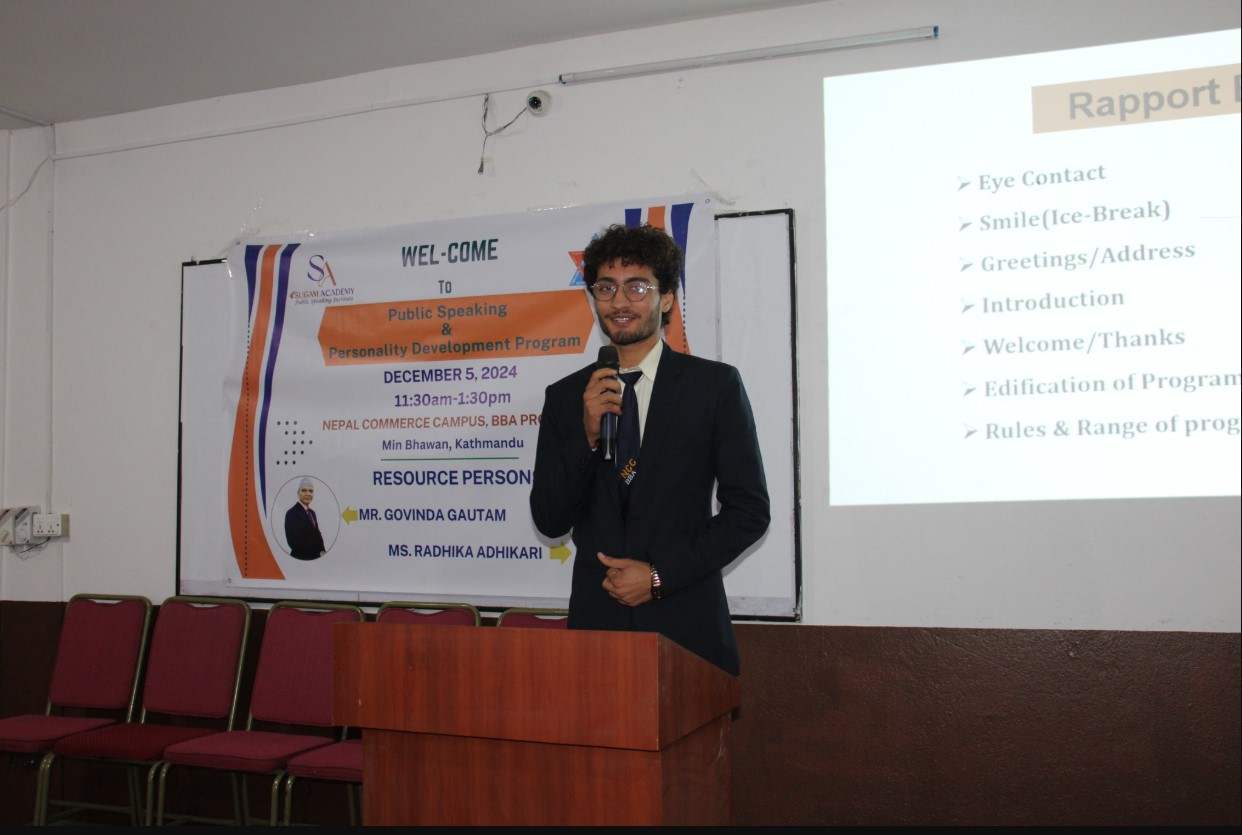
5. Personality Development Classes in Nepal: Going Beyond Academics
School teaches us how to solve equations, write essays, memorize dates… all good stuff. But what about everything else? Like how to introduce yourself without feeling weird. Or how to speak in a group without totally blanking out.
That’s where personality development classes in Nepal seriously step in.These aren’t like your typical lectures. It’s more like sitting in a room where you’re allowed to talk about stuff that matters — how to be more confident, how to manage pressure, how to stand out without shouting over others. Stuff no textbook covers.
What’s cool is how personal it feels. It’s not about turning into a loud, dramatic speaker. Not everyone wants that, and that’s fine. These classes are more about helping you figure out your own voice — and learning to trust it.
Many students walk in, unsure of themselves. Some won’t even make eye contact at first. And then, slowly, One day, they raise their hand. Next week, they will be leading a mini-discussion. It builds naturally.
6. Leadership Skills Training Activities That Build Confidence
Not everyone wants to be a leader, but being able to take initiative and handle responsibility is a valuable skill. That helps in just about everything.
That’s where leadership skills training activities come in. These aren’t about becoming the loudest person in the room — they’re more about understanding people, making decisions, and learning how to respond when things get tricky.
What happens over time is interesting. You begin speaking with more purpose. You learn how to listen better. And slowly, you become the person others turn to — not because you’re bossy, but because you’re steady and clear.
That’s what real leadership looks like, and these training sessions help students discover it in their way.
Most classrooms overlook the basics we need, suc
7. Soft Training Skills Every Student Must Learn
h as learning how to communicate with others, manage stress, or collaborate in a group. That’s where soft training skills come in handy.
These are the everyday tools that help students speak, listen more effectively, and remain calm under stress. Once they start practicing them, things begin to click — they feel more confident during presentations, group work gets easier, and interviews don’t feel so scary.
Soft training skills aren’t about being perfect — they’re about showing up as your best self when it matters.
Conclusion: Why It Matters
Communication isn’t just about talking — it’s about being understood. And for students growing up in a world that values clear ideas, confident voices, and strong presence, learning these skills early makes a huge difference.
From tackling stage fright to leading a team project, every aspect of public speaking and personality development course offers students something practical they can apply. It’s not about being perfect. It’s about being ready.
So, if you’re thinking about where to begin, start here — with focused training that builds both voice and confidence.Public Speaking | Personality Development Training in Nepal is not just a class. It’s the starting point for lifelong skills that will carry into college, career, and beyond.
FAQs
1. Why join public speaking training in Kathmandu?
To build confidence, speak clearly, and improve communication — skills every student needs.
2. What does a public speaking course for students include?
It covers body language, speech practice, confidence-building, and real speaking activities.
3. What are soft training skills?
They’re life skills, such as teamwork, listening, and confidence — taught in every session.
4. Will this help me overcome my fear of speaking in public?
Definitely. Regular practice and support help reduce stage fear over time.
5. Are leadership skills training activities part of it?
Yes. Students engage in group work and public tasks to develop leadership from the ground up.